
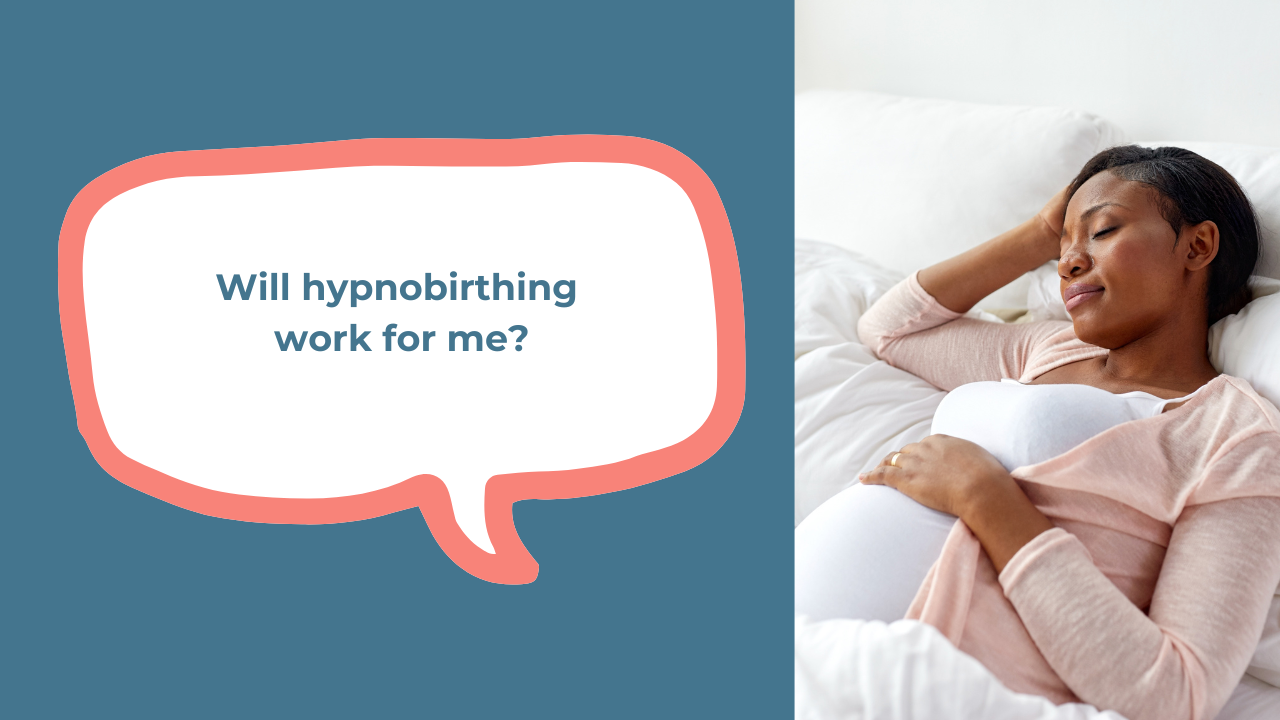
Will hypnobirthing work for me?
(What it can do, what it can’t, and how to tell if it’s a good fit)
If you’ve landed here, you’re probably weighing up a hypnobirthing package and wondering one of three things:
- “Is this genuinely useful… or is it just a nicely-packaged set of breathing exercises?”
- “I can just do this on Youtube” or learn it on instagram. Why do I need to do this?”
- “What if I’m the kind of person it doesn’t work for?”
Or perhaps your questions is different?
Let’s have a look at why hypnobirthing is honestly the most undervalued part of birth preparation and why that is.
What is really is hypnobirthing?
Hypnobirthing is a set of skills designed to help you stay steadier under pressure. That usually includes:
- Mindset techniques (ways to reduce anxiety and stress so that your body can do what it needs to do without the mind getting in way)
- Attention training (what you focus on changes what you feel)
- Self-hypnosis / guided relaxation (a learnable state, not mind control)
- Imagery and rehearsal (your brain responds to rehearsal more than it likes to admit)
- Language tools (how you frame sensations and events changes your experience of them)
- Partner support skills, not just practical but also mindset (so it isn’t all on you)
- Decision making tools - this helps improve outcomes even in situations where intervention is necessary.
In other words: it’s not a trend, some breathing, relaxation or how your partner can massage you during contractions. It’s training.
What hypnobirthing is not (so you don’t buy the wrong thing)
Let’s be honest about the bits that get oversold online.
- It’s not a promise of a pain-free birth. Marketing this way is unethical and doesn’t show understanding of the complexity of the mind and working with pain.
- It’s not a guarantee of a certain type of birth (unmedicated / water / home / etc).
- It’s not you being “put under” or losing control.
- It’s not only for calm people who are interested in alternative therapies.
What it is good for is helping you build a steadier internal response, so you can think more clearly, make better decisions, cope more effectively, and begin parenthood from a really strong place, rather than in recovery.
The real question: “Will it work for me?” becomes “Will I use it?”
Hypnobirthing works best when it becomes a habit. This doesn’t need to mean hours and hours. What really works is small, consistent practice
- a few go-to techniques
- and a plan for when things feel intense
I actually include tracks that are only 5 minutes which make it easier for you to find time when you are busy and which simplify learning.
If you’re a first-time mum
You might be thinking:
- “I don’t know what I don’t know.”
- “I’m worried I’ll panic.”
- “Everyone has an opinion and I can’t tell what’s true.”
- “I want to feel prepared, not ‘perfect’.”
- “I just want my baby to be safe”.
Hypnobirthing tends to help first-time mums by:
- giving you structure when everything feels new
- teaching you how to reduce fear and anxiety (rather than trying to “stay positive”)
- giving you a toolkit for uncertainty — because birth is not a controlled environment
- helping you practise a few techniques until they feel automatic
- Helping your partner know what’s happening and how to help
A simple first-time-mum practice
- 5–10 minutes most days (audio, breath, or imagery)
- 3 x a week or more listening to a long track(15-30 minutes before going to sleep)
- 1 longer practice session weekly (partner included if possible)
- a short “on-the-day” plan: what I’ll do if I feel overwhelmed
If you’re a second-time (or third-time) mum
You might be thinking:
- “I’m not doing that again.”
- “Last time didn’t go the way I hoped.”
- “I feel tense even thinking about labour.”
- “I’ve got less time now — and more responsibility.”
- “I need to brush off my hypnobirthing skills, I’ve forgotten everything”.
- “Was it just luck?”
Hypnobirthing tends to help experienced mums by:
- helping you reframe what happened before
- reducing anticipatory anxiety (the fear that starts weeks before birth)
- building a more confident internal script: “I know what to do when it gets intense.”
- creating a realistic plan that fits around family life
If your last birth was difficult
Hypnobirthing can be particularly helpful when it includes:
- space to process what happened (even briefly)
- targeted techniques for triggers (hospital environment, interventions, loss of control, specific fears)
- partner guidance (so you’re not carrying it alone)
You can choose an optional face to face session with me at a later date if you feel you need to go more deeply into this. This is the advantage of doing a course with a hypnotherapist.
Quick self-check: signs hypnobirthing is likely to be a good fit
You’ll probably benefit if you:
- like the idea of learning skills and feeling equipped
- enjoy listening to audio-tracks and meditations
- want to feel calmer even if your plan changes
- are open to practising little-and-often
- want your partner to have a meaningful role (even if they’re sceptical)
You might feel frustrated with hypnobirthing if you:
- want a quick fix without practice
- are looking for certainty
- have been sold a “perfect birth” narrative and feel pressured by it
So… will it work for you?
If you’re willing to practise a little, and you want tools that help you stay steadier in the unknown, hypnobirthing is often a very sensible investment.
Not because it promises a particular outcome — but because it trains your mind and body to respond differently when it matters.
Ready to explore the package?
If you want a hypnobirthing course that’s evidence-informed, practical, and taught with real therapeutic depth from someone who also attends births you can check out the full hypnobirthing package here:
Have a look at the course here
Stay connected with news and updates!
Join my mailing list to receive the latest news and updates.
Don't worry, your information will not be shared.
I hate SPAM. I will never sell your information, for any reason.
